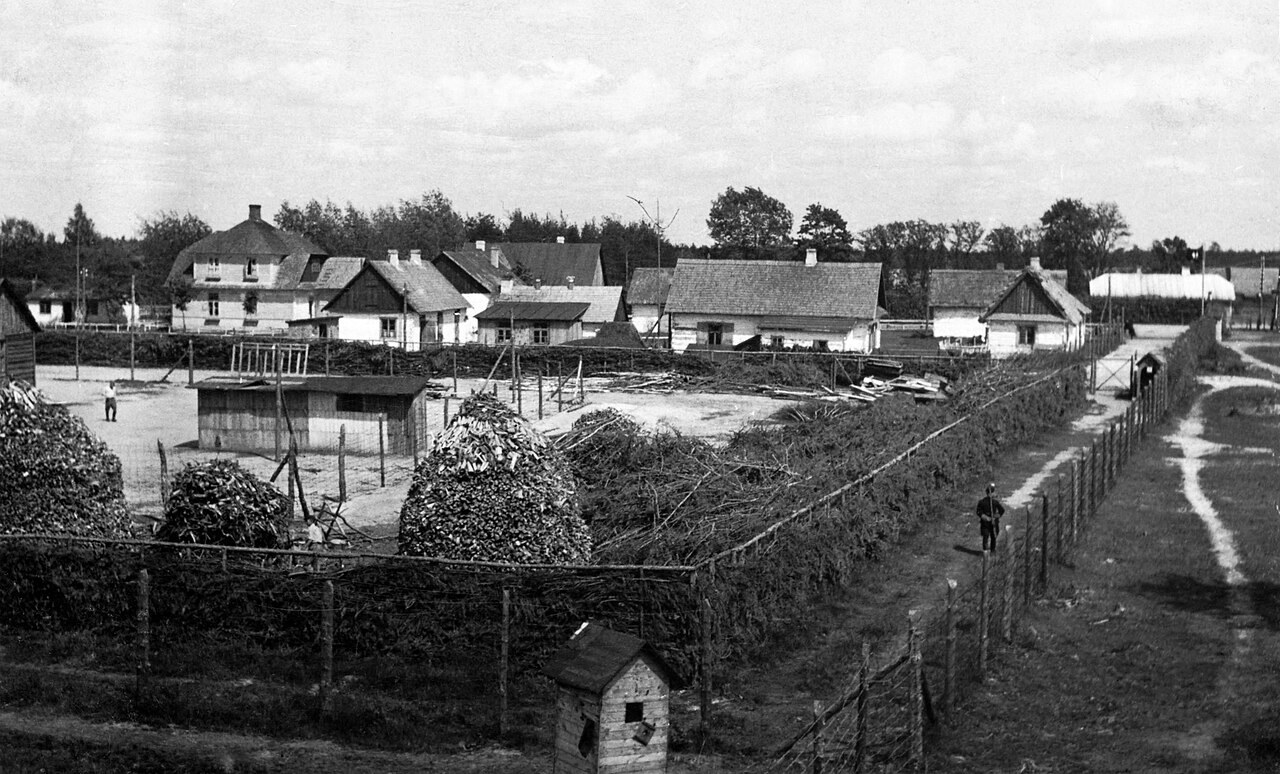
Sobibor was the second of the three Operation Reinhard killing centers, built in spring 1942 in a swampy, thinly populated corner of the Lublin District near the Bug River. Like its sister camps, it was run by a small German and Austrian staff assisted by Trawniki-trained guards, and it was designed to murder the Jews of the General Government and beyond; at least 167,000 people, almost all of them Jews, died there. The camp was laid out so that its killing area was deliberately hidden from the rest of the compound. What made Sobibor historically distinct was its ending: on 14 October 1943 the prisoners staged the most successful uprising of any Nazi killing center, killing eleven SS staff and enabling some 300 to break out. Roughly fifty escapees survived the war, and the revolt prompted the Germans to dismantle the camp entirely and erase its traces.