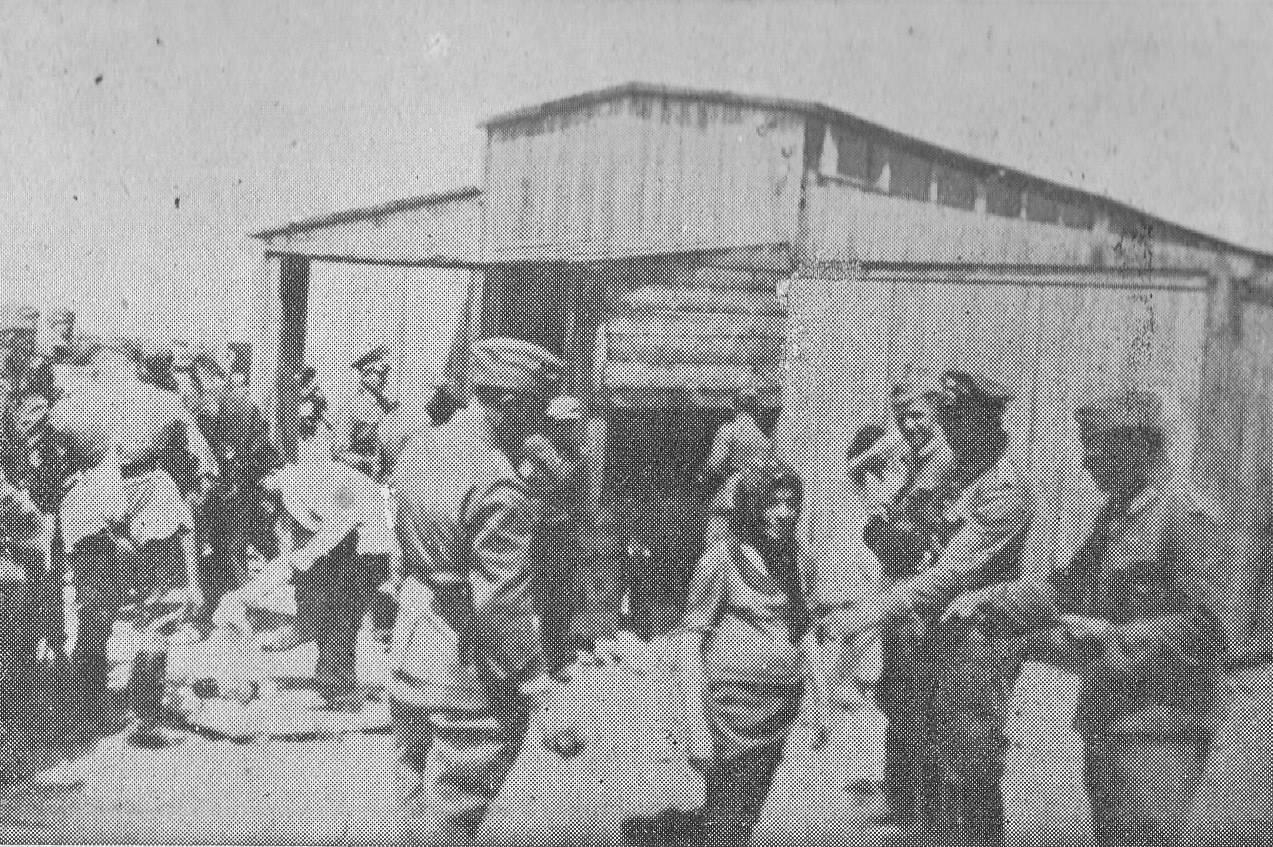
Majdanek stood on the southeastern edge of Lublin, in full view of the city, and it occupies an unusual place among the camps: conceived in 1941 as a vast forced-labor camp to supply construction materials for German settlement in the occupied east, it became deeply entangled in the murder of the Jews of the Lublin District under Operation Reinhard. Built initially by Soviet prisoners of war and later filled with Jews and non-Jewish Poles, it served as a holding camp, a labor camp, and at times a site of mass murder, with between roughly 78,000 and 130,000 people dying there. On 3 November 1943, in the 'Harvest Festival' action, the SS murdered some 18,000 Jews at the camp in a single day. Because the Soviet advance was so rapid in July 1944, Majdanek was captured almost intact, the first major camp to be liberated, and its preserved barracks and the mound of human ashes at its memorial made it one of the earliest physical proofs of the Nazi killing system shown to the world. (Many scholars formerly counted Majdanek as a sixth killing center; current USHMM research classifies it primarily as a concentration camp that nonetheless carried out mass murder.)